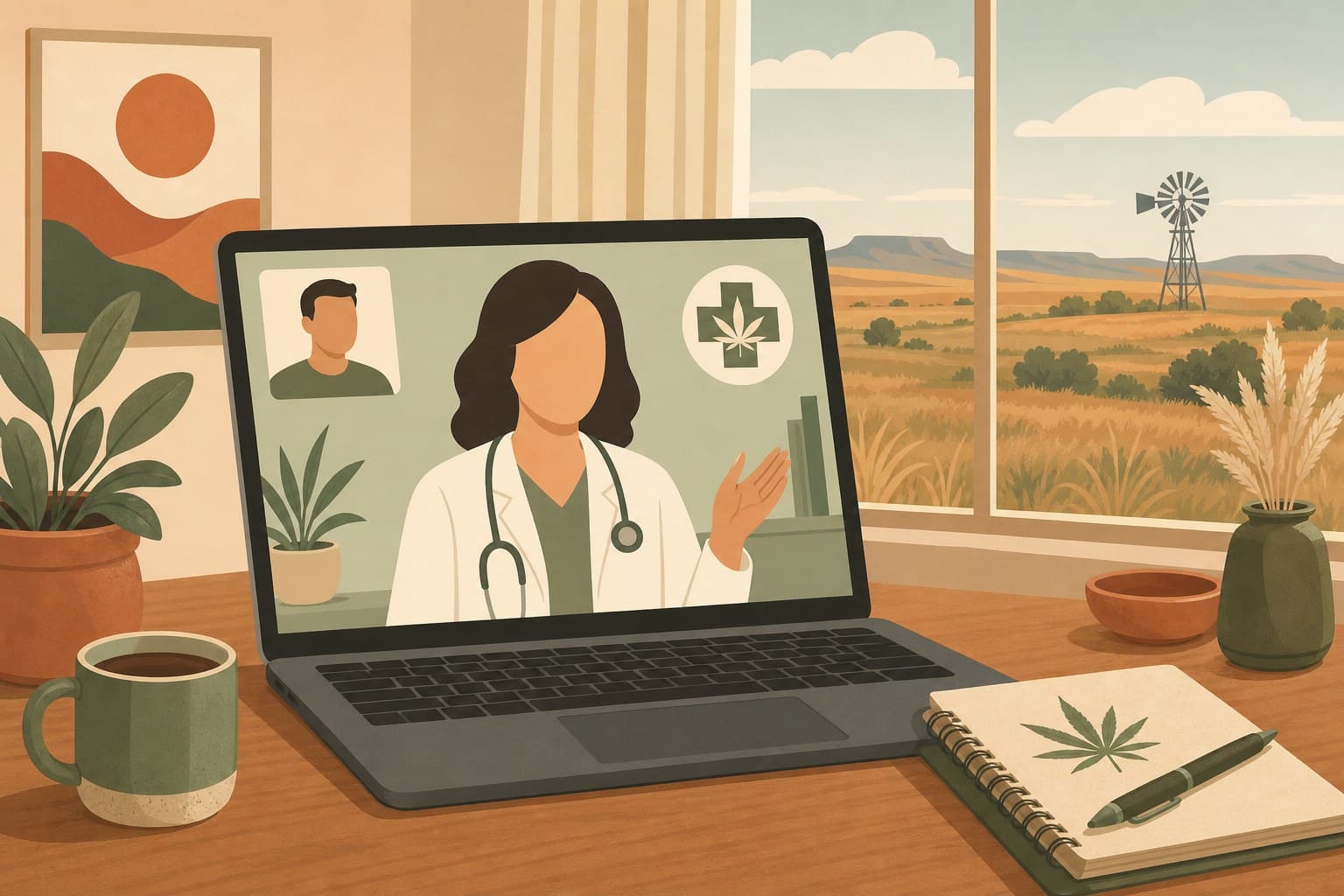
If you've been researching how to get a medical marijuana card in Oklahoma, you've probably run into the phrase "420 evaluation" and wondered what it actually means. It sounds like jargon, and plenty of websites use the term without ever explaining it.
Here's the short version: a 420 evaluation is just a doctor's appointment. It's the medical assessment Oklahoma requires before you can apply for your patient license with the Oklahoma Medical Marijuana Authority (OMMA). No card exists without one, so it's worth understanding what you're signing up for.
This guide walks through the whole thing in plain English — what the evaluation is, what happens during it, how to prepare, and what comes after.
What Is a 420 Evaluation, Exactly?
A 420 evaluation is a consultation with a licensed physician who determines whether you qualify for a medical marijuana recommendation. The "420" part is just cannabis culture slang that stuck — there's nothing mysterious about the appointment itself.
In Oklahoma, the process works like this:
- You meet with a doctor who is registered to recommend medical marijuana in the state.
- The doctor reviews your health concerns and medical history.
- If the doctor believes medical marijuana may help your condition, they issue a written recommendation (sometimes called a certification).
- You use that recommendation to apply for your patient license through OMMA.
The evaluation is the medical half of the process. The OMMA application is the legal half. You need both, and the evaluation always comes first. If you want the full picture of how the pieces fit together, our step-by-step guide to getting a medical card in Oklahoma covers the entire journey from start to finish.
Who Needs One?
Every patient applying for an Oklahoma medical marijuana license needs a physician recommendation — there's no way around it. That includes:
- First-time applicants who have never held a card
- Renewing patients, since Oklahoma recommendations and licenses expire and must be renewed (our renewal guide explains what to prepare)
- Caregivers' patients and minor patients, who have additional requirements
One thing that surprises people: Oklahoma doesn't have a fixed list of qualifying conditions the way some states do. The decision is left to the doctor's medical judgment. That's why the evaluation matters — it's a real conversation about your health, not a box-ticking exercise.
What Actually Happens During the Evaluation
Most evaluations today happen online by video call, and they typically take about 10 to 20 minutes. Here's what a typical appointment looks like:
Before the call. You'll fill out a short intake form covering your basic information and the health concerns you want to discuss. Be honest and specific — it helps the doctor prepare.
During the call. The doctor will ask about your symptoms, how long you've been dealing with them, what you've tried before, and how they affect your daily life. This may include questions about sleep, pain, mood, appetite, or other concerns depending on what you share. It feels a lot like any other telehealth visit — because that's exactly what it is.
The decision. If the doctor determines that medical marijuana may help, they issue your recommendation, usually shortly after the appointment. If they don't think it's appropriate for you, a reputable provider will tell you honestly rather than stringing you along.
If you're curious how the online version compares to a traditional office visit, our guide to online medical marijuana evaluations in Oklahoma goes deeper on that.
How to Prepare
A little preparation makes the appointment faster and smoother:
- Have your ID ready. You'll need proof of identity and Oklahoma residency for the OMMA application afterward, and some providers verify identity at the evaluation stage too.
- Gather relevant medical records if you have them. They're not always required in Oklahoma, but recent records — prescriptions, diagnoses, visit summaries — help the doctor understand your situation.
- Write down your main concerns. It's easy to blank on details during a call. A short list of symptoms and how long you've had them keeps the conversation focused.
- Find a quiet, private spot with decent internet. Treat it like any other doctor's appointment.
What a 420 Evaluation Is Not
A few common misconceptions worth clearing up:
- It's not a guaranteed approval. The doctor exercises real medical judgment. A legitimate evaluation can end with a "no."
- It's not a physical exam. For most patients, it's a conversation about your health history and symptoms.
- It's not the same as getting your card. The evaluation produces a doctor's recommendation. You still have to apply to OMMA, pay the state fee, and wait for the state to process your application — OMMA has up to 14 business days to respond.
- It's not "buying a card." You're paying for a doctor's time and medical assessment, the same way you'd pay for any consultation. The license itself comes from the state.
What Happens After: The OMMA Application
Once you have your recommendation, the rest is paperwork:
- Create an account on the OMMA licensing portal.
- Complete the patient application and upload your recommendation, ID, proof of residency, and a photo that meets the state's requirements.
- Pay the state application fee (discounts exist for patients on SoonerCare or Medicare, and for 100% disabled veterans).
- Wait for OMMA's decision — up to 14 business days.
Your card, once approved, is valid for two years. Set a reminder early, because renewing means doing the evaluation again.
How Much Does a 420 Evaluation Cost?
Evaluation fees vary by provider, and the state application fee is separate. We'd rather point you to accurate, current numbers than quote something that might change — see our pricing page for what an evaluation with us costs today.
One tip: be cautious of providers advertising prices that seem dramatically lower than everyone else's. A real evaluation involves a licensed physician's time, and rock-bottom prices sometimes mean a rushed or rubber-stamp appointment that doesn't serve you well.
Common Questions First-Time Patients Ask
Do I need a specific diagnosis before booking? No. You don't need to arrive with a label for your condition. Come ready to describe your symptoms and how they affect you, and let the doctor do the assessing.
Will my regular doctor find out? Your evaluation is a private medical consultation. Nothing is shared with other providers without your involvement, and OMMA's patient registry is confidential under state law.
What if the doctor says no? Then you've had an honest medical opinion, which is what you're paying for. Ask the doctor what other options may help — a good physician will point you somewhere useful either way.
Can I do the evaluation from my phone? Yes. Most Oklahoma evaluations happen over video, and a smartphone with a camera and a stable connection is all you need.
How soon can I apply to OMMA afterward? As soon as you have your recommendation in hand. Many patients submit their state application the same day.
The Bottom Line
A 420 evaluation is simply the doctor's visit that starts your medical marijuana journey in Oklahoma — a short, straightforward conversation with a licensed physician about whether cannabis may help you. Prepare a little, be honest, and you'll likely find it's far less intimidating than the name suggests.
When you're ready, you can book an evaluation with one of our Oklahoma-licensed doctors online, at a time that fits your schedule.