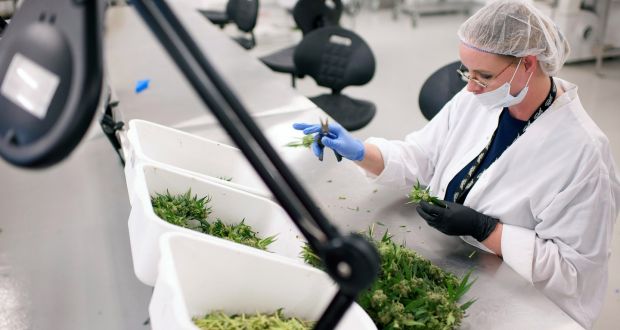
State regulators in Maryland have sprung into action, taking particular marijuana growing business’s products off the shelves, leading to confusion and rising levels of frustration amongst all stakeholders – patients, dispensaries and similar business operators.
Under the label of an “administrative hold”, the Maryland Medical Cannabis Commission has blocked all marijuana-based products affiliated with the medical marijuana producing business, ForwardGro, from the market.
After medical marijuana was legalized in Maryland in 2013, ForwardGro became one of the biggest names in the industry. Running a large greenhouse in Lothian, in Anne Arundel County, ForwardGro was the first organization in Maryland to get a license to legally grow and sell marijuana (for medical purposes only).
As a “precautionary measure”, the notification to put ForwardGro products on hold was sent to 69 dispensaries in Maryland, with a promise to “follow up with further instructions” in the near future. However, it has now been more than three weeks since the involved stakeholders have heard from the agency, leaving them confused about the nature of the possible dangers that they were supposedly being saved from.
In the first of its kind, this show of control by the commission might be an accurate prognosis of how it would operate in the future. Soon, if the authority continues to show its regulatory brawn through similar actions, ForwardGro might not be the only company to have its products quarantined.
These regulations were put as a result of ex ForwardGro employees coming forward with allegations of illicit use of pesticides on the marijuana crops, by the company. However, all allegations were refuted by ForwardGro as “an attack on our business”.
Amongst ForwardGro’s many investors are influential people with political clout i.e. political donors and former government officials. Gary Mangum, the chief executive of flower wholesaler Bell Nursery and at the top in the list of donors to Maryland Gov. Larry Hogan (R), it owns part of the marijuana-producing business.
According to the commission’s spokesperson Jennifer White, the commission “has reasonable suspicion of an operational failure or of conditions that create a likelihood of diversion, contamination, or a risk to the public health.”, in which case, the state allows them to give the regulatory measures. She refused to comment on the situation further. She ended the questioning with a brief statement, communicating through email, which stated that “The Commission does not comment on active investigations, and this investigation is well underway”.
While the commission’s chairman Brian Lopez continues to turn a blind eye to inquiries from the patients, pharmacies, media and everyone else involved, the Executive Director Joy Strand says that this isn’t the first time something like this has happened. According to Strand, the commission had ordered similar holds for other products before. However, she refused to give details about the proceedings of the cases and how they ended. Like White, Strand also said that the MMCC did not comment on ongoing investigations.
MMCC’s unusual silence has not only left industry stakeholders puzzled, but has also sent a wave of fear and uncertainty for what the future means for them.
“I don’t think it’s in the interest of patients or the industry not to be given specifics when a recall or a hold is issued,” said Mackie Barch, chair of Maryland Wholesale Medical Cannabis Trade Association, of which ForwardGro is a member. Barch appears perplexed by the lack of explanation and clarity being provided by the state commission. According to him, it is an uncertain time for both the patients and the businesses involved.
“From a patient perspective, it’s a little bit scary,” Barch said. “From a company perspective, if you have this happen, it’s so detrimental to your business. It kills you reputation-wise, but secondarily to that, it impacts your overall financial performance.”
According to Barch, it is not just ForwardGro who is suffering from the hold on their products. Dispensaries which stock ForwardGro products are also being affected greatly.
“People have payrolls to meet, bills to pay, and when there’s this overhang of this unknown thing from the state, it cripples your business,” he said. “I don’t think it’s fair to ForwardGro or the other companies that depend on ForwardGro’s products.”
Other businesses, some which aren’t directly linked to the company, are also coming out in solidarity with ForwardGro. Wendy Bronfein, director of marketing at Curio Wellness, finds the information vacuum being created by MMCC to be very disconcerting and counterproductive.
“Any and all players should be able to understand when the powers that be make a call on a company and product, and in this case calling a hold,” Bronfein said. “The lack of transparency is not productive.”
ForwardGro officials have refused to deny or accept the speculations that this sudden quarantine by the commission is due to the accusations of illegal pesticide use (which they previously denied as false propaganda against their business).
According to Vicki Bendure, ForwardGro’s spokesperson, all of their products have passed pesticide testing by state-approved labs.
“We are cooperating with the Commission and working to learn more about the basis of the hold and to resolve this matter,” Bendure said in an email, “ForwardGro remains committed to providing patients in Maryland with quality medical cannabis.”
This summer, three former ForwardGro employees, who claim to have taken the matter to company executives before resigning, gave sworn statements to the state legislator that ForwardGro began using pesticides when initial crops showed signs of white powdery mold and other problems. According to them, the company was “desperate and willing to try anything”.
However, as of last spring, the General Assembly passed a legislation making many pesticides legal for use by medical marijuana growers. So even if the allegations are proven to be true, ForwardGro’s actions might still fall under the legal umbrella.